


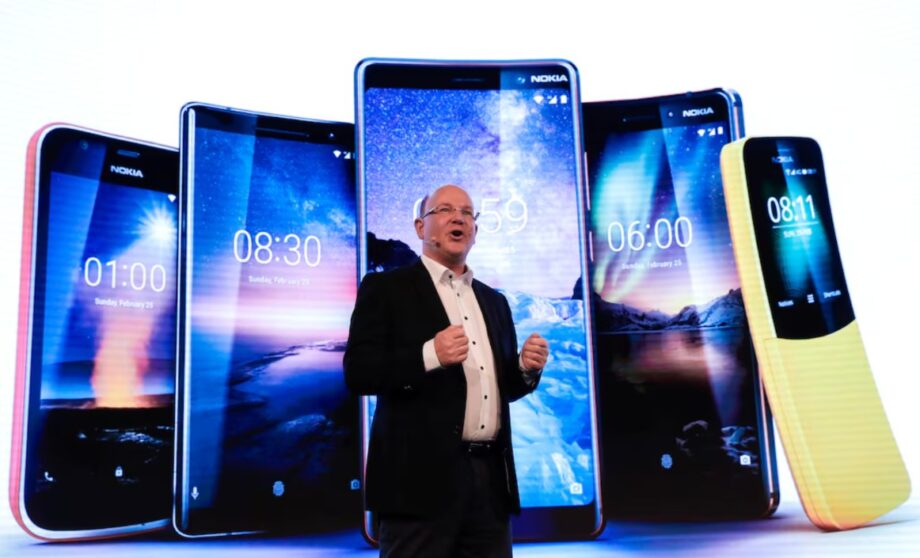
For much of the past decade, Nokia was often viewed as a company defined by its past.
The Finnish technology giant, once synonymous with mobile phones, gradually transformed into a telecommunications infrastructure provider focused on network equipment, optical systems, and carrier services. While the business remained important to global communications, it rarely generated the excitement associated with high-growth technology companies.
That narrative has shifted dramatically in 2026.
Nokia’s shares have surged this year as investors increasingly see the company as a potential beneficiary of the artificial intelligence boom, positioning it alongside businesses helping to build the infrastructure that powers modern AI systems.
Why Investors Are Looking at Nokia Differently
The rise of artificial intelligence has sparked enormous demand for data centers, cloud computing infrastructure, and high-speed networking technology.
While much of the market’s attention has focused on AI chips and semiconductor companies, large-scale AI deployments require a broader ecosystem of technologies.
AI data centers depend on:
- High-speed optical networking
- Data center switches
- IP routing infrastructure
- Cloud connectivity solutions
- Advanced transport networks
These are areas where Nokia already has an established presence.
As a result, investors are increasingly viewing the company as an AI infrastructure participant rather than simply a telecom equipment supplier.
Strong Share Performance Fuels Optimism
Nokia has emerged as one of the standout performers in European technology markets during 2026.
The company’s share price has roughly doubled this year, reflecting growing confidence that AI-related demand could become a significant long-term growth driver.
Several analysts believe the market is beginning to reassess Nokia’s growth prospects as demand for networking equipment expands alongside global AI investments.
Analysts Highlight Growing AI Opportunities
Recent analyst commentary has added momentum to the bullish outlook.
Several research firms have pointed to increasing engagement between Nokia and major cloud providers, often referred to as hyperscalers.
These companies operate some of the world’s largest data centers and are investing heavily in AI infrastructure.
Analysts have highlighted growth opportunities across:
Optical Networking
AI workloads generate enormous volumes of data that must be transmitted rapidly between servers, storage systems, and computing clusters.
Optical transport systems help enable these high-speed connections.
IP Networking
Data center networks require advanced routing and switching technologies capable of handling growing traffic demands.
Nokia’s IP networking business has become an increasingly important part of its AI-related growth story.
Cloud Infrastructure
The expansion of cloud services and AI applications continues to drive demand for networking solutions that support large-scale computing environments.
AI Orders Continue to Gain Attention
One of the strongest signals for investors has been the company’s reported growth in AI and cloud-related business.
According to publicly reported company updates, Nokia has seen substantial increases in AI-focused customer activity over the past year.
Industry observers note that orders associated with AI infrastructure projects have become a growing contributor to future revenue visibility.
A significant backlog of previously secured contracts could also support revenue growth over the coming years as projects move from the order stage into deployment.
Financial Performance Reflects Momentum
Recent earnings results have reinforced investor confidence.
The company reported stronger-than-expected operating profit growth, while sales linked to AI and cloud customers expanded significantly compared with previous periods.
Nokia has also increased its expectations for long-term growth within AI and cloud infrastructure markets, reflecting broader industry optimism about future demand.
For investors, these developments suggest that AI may become a meaningful growth engine rather than a short-term opportunity.
The Bigger Picture: AI Needs More Than Chips
The AI boom is often associated with graphics processing units (GPUs) and advanced semiconductors.
However, every AI model requires a vast network infrastructure capable of moving data efficiently between thousands of servers.
Without high-capacity networking systems, even the most powerful processors cannot operate effectively at scale.
This reality has created opportunities for companies that provide:
- Optical transport technology
- High-performance networking hardware
- Cloud connectivity solutions
- Data center infrastructure
Nokia’s growing relevance in these segments explains much of the renewed investor interest.
Challenges Still Remain
Despite the optimism, risks remain.
The company’s future growth is closely linked to continued investment in AI infrastructure by major cloud providers and technology companies.
Potential challenges include:
Slower AI Spending
If hyperscalers reduce capital expenditures on data centers, demand for networking equipment could weaken.
Competitive Pressure
The networking and optical infrastructure markets remain highly competitive, with several global technology companies competing for market share.
Execution Risks
Investors will be watching closely to see whether Nokia can convert growing order activity into sustained revenue and profit growth over the coming years.
What Investors Are Watching Next
Market attention is increasingly focused on future earnings reports and updates related to AI-driven orders.
Investors will be looking for evidence of:
- Continued growth in cloud-related demand
- Expansion of AI infrastructure contracts
- Margin improvement in networking divisions
- Progress in data center switching and optical networking
These metrics could help determine whether Nokia’s recent share price surge reflects a sustainable transformation or merely short-term enthusiasm.
Final Takeaway
Nokia’s resurgence illustrates how quickly market narratives can change.
Once viewed primarily as a legacy telecom infrastructure company, the Finnish technology group is now increasingly associated with one of the world’s fastest-growing technology themes: artificial intelligence.
While challenges remain, growing demand for data center networking, optical transport systems, and cloud infrastructure has given investors a fresh reason to re-evaluate the company’s long-term prospects.
Whether Nokia ultimately becomes a major AI infrastructure winner remains to be seen, but in 2026 it has already achieved something many thought unlikely: it has returned to the center of the technology investment conversation.