

Apple’s new chief executive is reportedly pushing software chief Craig Federighi to accelerate the company’s artificial intelligence strategy, with a particular focus on transforming Siri into an AI agent capable of completing tasks for users. The report also points to changes in Apple’s iOS 28 development approach.
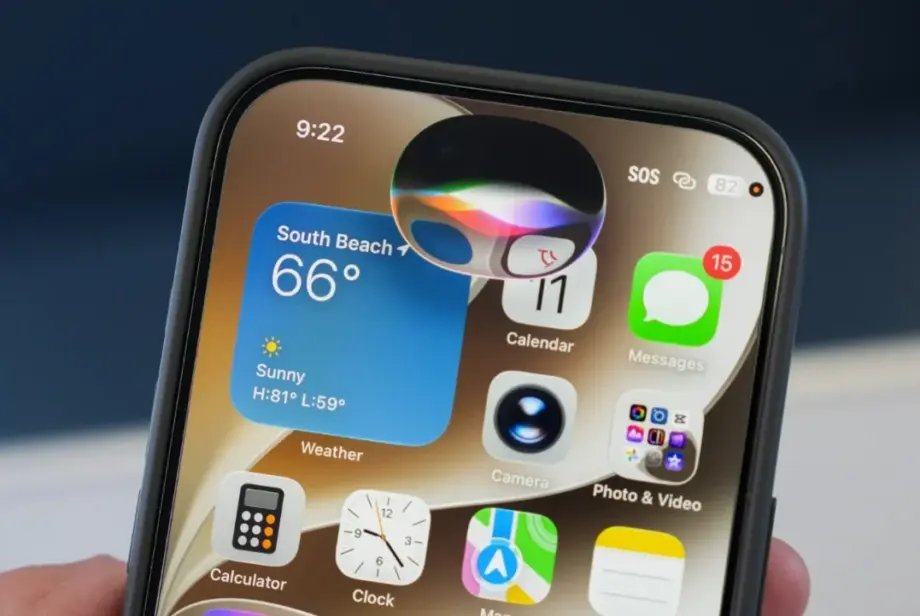
Apple is reportedly preparing a more ambitious artificial intelligence strategy as it seeks to evolve Siri beyond its traditional role as a voice assistant.
According to Bloomberg’s Power On newsletter, Apple’s new chief executive is pressing software engineering chief Craig Federighi to pursue a more aggressive approach to AI development.
The reported objective is to transform Siri into a more autonomous digital assistant capable of taking actions and completing tasks on behalf of users.
The development could represent an important shift in Apple’s approach to integrating artificial intelligence into its software ecosystem.
Instead of focusing primarily on responding to questions and executing individual voice commands, Apple reportedly wants Siri to develop more advanced agent-like capabilities.
The newsletter also mentions changes to the company’s development strategy for iOS 28, alongside the commercial availability of a new MacBook Pro.
However, the supplied excerpt does not provide the details of those software changes or establish a timeline for the more advanced Siri capabilities.
Apple Reportedly Wants Siri to Become a True AI Agent
The central claim in Bloomberg’s report is that Apple wants Siri to become an autonomous AI agent.
An AI agent generally refers to software capable of taking a user’s objective, determining the steps required and performing actions through supported applications or services.
This differs from a conventional voice assistant that primarily responds to commands or provides information.
For example, a traditional assistant might set a reminder when asked.
A more capable AI agent could potentially coordinate several related actions across different applications, provided it has the necessary permissions and integrations.
This could include gathering information, preparing a sequence of actions and requesting confirmation before completing sensitive operations.
Such examples illustrate the concept of agentic AI. They are not confirmed features of Apple’s upcoming Siri implementation.
The supplied Bloomberg excerpt does not identify which specific tasks Apple intends to enable or how much autonomy users will be able to grant.
Also Read: Apple Introduces App Store Retention Messages to Offer Discounts Before Subscription CancellationCraig Federighi Faces Pressure to Expand Apple’s AI Ambitions
Craig Federighi, Apple’s senior software engineering executive, plays a central role in the development of the company’s operating systems and software experiences.
According to the report, Apple’s new CEO is pushing Federighi toward a more ambitious AI development strategy.
The reported direction suggests that artificial intelligence is becoming an increasingly important consideration in Apple’s software planning.
Siri is particularly relevant because it serves as a user-facing interface across multiple Apple product categories.
Making the assistant capable of carrying out more complex activities could require coordination between AI models, application frameworks, operating system permissions and security controls.
However, Bloomberg’s supplied excerpt does not provide specific internal directives, engineering milestones or organisational changes connected to the CEO’s reported request.
It also does not identify the new chief executive by name.
That leadership detail should be confirmed from a current authoritative source before publication.
Also Read: Apple Reportedly Cuts AI Spending Limits for Engineers as Company Seeks to Control CostsWhat Could an Agentic Siri Do?
The term agentic AI describes systems intended to go beyond generating text or answering questions.
Depending on their design, such systems may be able to interpret goals, plan actions and interact with supported digital tools.
For Siri, that could eventually mean moving from individual commands toward more complex workflows.
Traditional Siri vs an Agentic AI Assistant
| Capability | Traditional voice assistant | More advanced AI agent |
|---|---|---|
| Answering questions | Supported | Potentially supported with additional context |
| Setting reminders | Supported | Could form part of multi-step workflows |
| Understanding complex requests | Varies by capability | Designed to interpret broader goals |
| Planning multiple actions | Limited in conventional workflows | A potential core capability |
| Interacting across applications | Depends on supported integrations | Could coordinate supported applications |
| Executing sensitive actions | Subject to existing permissions | Would require appropriate authorisation and safeguards |
| Completing multi-step tasks | Usually requires explicit commands or configured workflows | A major objective of agentic systems |
This table explains general differences between assistants and AI agents. It does not confirm that Apple has implemented the listed agentic capabilities in Siri.
A successful agentic assistant would also need to handle errors and unexpected situations.
For example, a system executing a multi-step request should be able to recognise when information is missing, a permission is unavailable or an action requires the user’s approval.
These requirements are particularly important when an assistant interacts with personal information or account settings.
Why Apple’s Siri Strategy Matters
Siri has long been an important part of Apple’s software ecosystem.
The assistant provides a familiar interaction method for users who want to control devices, request information or perform supported tasks without manually navigating applications.
However, more advanced AI systems increasingly focus on interpreting natural language and carrying out longer workflows.
This creates an opportunity for smartphone operating systems to make AI assistance a more integrated part of everyday computing.
Apple’s reported strategy suggests it wants Siri to play a larger role in that experience.
The potential value would come not simply from providing more detailed answers, but from allowing users to accomplish tasks with fewer manual steps.
Whether Apple can deliver that experience will depend on the reliability of its AI models, supported integrations, developer tools and operating system safeguards.
The supplied report does not establish how Apple will divide processing between local devices and cloud-based infrastructure.
Also Read: Apple Creator Studio Update Adds AI Assistants, MotionVFX and Generate FillPrivacy and User Control Could Be Important
Greater AI autonomy introduces questions about privacy, permissions and user control.
An assistant capable of performing actions on behalf of a person may require access to more contextual information than a system designed only to answer isolated questions.
That makes permission management important.
Users need to understand what information the assistant can access, which applications it can interact with and when confirmation is required.
Sensitive actions, such as sending messages or modifying account information, would also require safeguards appropriate to the task.
Apple has not detailed the specific security architecture for the reported agentic Siri initiative in the supplied excerpt.
As a result, it would be premature to claim that the future system will provide a particular level of autonomous access or use a specific privacy technology.
Apple Reportedly Changes Its iOS 28 Development Strategy
The Bloomberg newsletter also mentions a shake-up in Apple’s development strategy for iOS 28.
However, the excerpt does not explain the nature of those changes.
It does not identify which development teams are affected, whether the changes concern AI features or whether Apple has adjusted its software release schedule.
The reference is nevertheless relevant because changes to Siri would likely require work across Apple’s software infrastructure.
A more capable AI assistant may depend on operating system integrations, app permissions and software frameworks.
However, a connection between the iOS 28 development changes and the reported Siri initiative has not been explicitly established in the supplied information.
The two developments should therefore be treated as related topics in Apple’s broader software coverage rather than a confirmed single programme.
ALso Read: Apple Highlights iPhone Duo Apps, but Some Updates Will Arrive After LaunchNew MacBook Pro Also Mentioned in Bloomberg Report
The newsletter also references a new MacBook Pro going on sale.
The supplied excerpt does not identify its processor, specifications, launch price or regions of availability.
Bloomberg’s previous Power On edition, published on November 1, discussed a touch-screen MacBook Pro and Apple’s software organisation.
However, the current excerpt does not provide enough information to establish the complete specifications of the MacBook Pro now available for purchase.
Readers interested in pricing and hardware details should consult Apple’s official product listings.
Apple’s Reported AI Strategy: What Is Known?
| Topic | Information from supplied report |
|---|---|
| Company | Apple |
| Main development | CEO reportedly seeking a more ambitious AI strategy |
| Software executive | Craig Federighi |
| Primary AI product | Siri |
| Long-term objective | More autonomous, agent-like task completion |
| CEO identity | Not specified in supplied excerpt |
| iOS 28 | Development strategy reportedly changing |
| Detailed iOS 28 changes | Not provided |
| Agentic Siri feature list | Not confirmed |
| Public release timeline | Not announced in excerpt |
| Additional product news | New MacBook Pro reportedly on sale |
| Reporting source | Bloomberg Power On |
When Will Apple Launch an AI Agent Version of Siri?
The supplied report does not provide a confirmed launch date for a fully agentic Siri.
It also does not indicate whether Apple intends to release the new capabilities together or introduce them through several software updates.
A complex assistant may require extensive testing, particularly if it can access personal information or initiate actions within applications.
Apple could also choose to restrict certain functions to compatible devices or software versions.
However, no such device limitations or rollout strategy have been confirmed in the provided report.
Any claim about a particular launch month, supported iPhone model or guaranteed iOS 28 feature would therefore be speculative.
Also Read: Meta and Apple Join Forces to Run Muse Spark Open AI on Mac StudioWhat Happens Next for Apple’s AI Plans?
Apple’s reported internal push suggests that the company wants to make AI assistance a more capable part of its software ecosystem.
For users, the most meaningful potential change would be a Siri experience that can understand broader requests and complete supported tasks rather than requiring a separate command for every step.
For developers, such a shift could increase the importance of app integrations and the systems used to authorise AI-driven actions.
However, the report does not yet provide enough technical detail to assess Apple’s implementation.
The central development is Bloomberg’s claim that Apple’s leadership wants a more ambitious AI strategy, with Siri evolving toward an assistant capable of acting on behalf of users.
Whether that ambition translates into specific features, and when those features may become available, remains unconfirmed.
TechLayers will continue following Apple’s AI strategy, Siri developments and future iOS updates.