


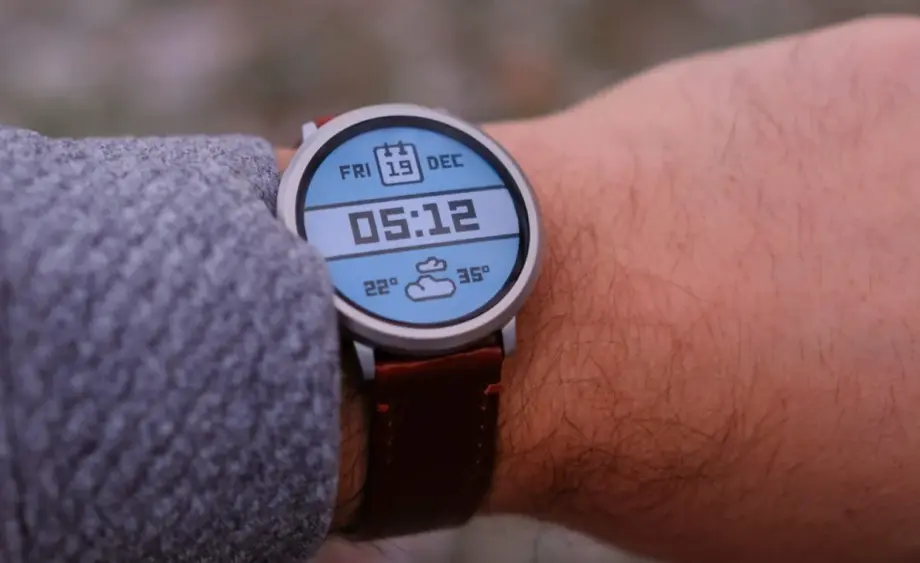
A developer preview introduces reusable data sources and actions, with JavaScript running inside the Pebble smartphone app rather than on the watch.
Pebble is developing a plugin system that could make it easier for watchfaces and apps to connect with outside services.
The official developer documentation describes plugins as JavaScript components running inside the Pebble mobile app on a connected phone. They provide two capabilities: sources, which supply information to watchfaces or apps, and actions, which watchapps can trigger.
The distinction is straightforward. A source provides something to display; an action asks a service to do something.
How plugins could change Pebble watchfaces
Pebble’s documentation uses weather as an example. Instead of every watchface maintaining its own weather integration and API key, a compatible watchface can request information from an installed weather plugin.
For developers, that could separate two jobs that otherwise become tightly connected: designing the watchface and maintaining its connection to a data provider.
Consider a hypothetical developer who wants to build a simple face with the time and local conditions. A reusable integration could let that developer concentrate on readability, layout and interaction rather than recreate the service connection.
It would not eliminate development work. The watchface still needs to support the plugin system and decide how to present the information.
Actions extend the idea beyond displaying data
Plugins can also expose operations such as switching off a light or adding a task, according to Pebble’s documentation. These actions can be triggered by watchapps.
This creates a useful separation between showing information and controlling something. A weather panel needs data; a smart-home control needs an instruction to reach the appropriate service.
For users, the eventual benefit will depend on which integrations developers build and maintain. A flexible framework is the foundation, but the availability and reliability of compatible plugins will determine its everyday usefulness.
Phone-based JavaScript is not entirely new to Pebble
Pebble already supports phone-side JavaScript through PebbleKit JS, which lets watchapps and watchfaces use capabilities such as internet access, location and additional storage.
The important development here is the reusable plugin interface, rather than the mere ability to execute JavaScript on a phone.
Running plugin code away from the watch also should not be treated as proof of zero battery impact. Overall consumption would still need testing under real usage, including communication and display updates.
Can Pebble owners use plugins now?
The documentation labels the system a preview. Plugins are disabled by default in the mobile app, the programming interface is expected to change, and plugin publishing is currently limited to invited developers. Pebble also tells developers not to publish plugin-dependent apps to the store yet.
That makes this a development milestone rather than a finished feature available across the app catalogue.
The next step to watch is broader availability alongside compatible apps and watchfaces. If developers adopt the system, Pebble owners could gain more choice in how their preferred designs obtain information and connect to services.