


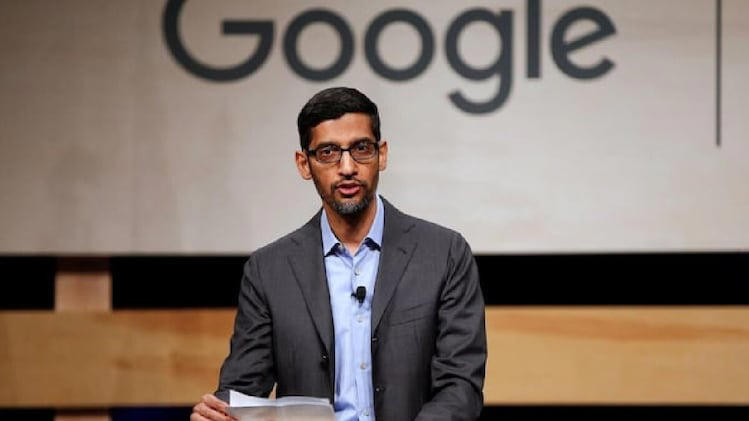
Bext Business Desk | July 3, 2026
“India has long been an exporter of talent to tech companies. But it is India that’s now undergoing its own revolution.”
More than a decade after these words were spoken, the statement remains one of the most frequently cited observations about India’s rise as a global technology powerhouse.
The quote came from Sundar Pichai, the India-born chief executive of Google and its parent company Alphabet, and captured a major shift taking place in the country’s digital economy.
At a time when India was rapidly embracing smartphones, internet connectivity, and digital services, Pichai argued that the nation was no longer merely supplying talent to the world—it was creating its own innovation ecosystem.
When Did Sundar Pichai Say This?
Pichai made the statement in 2015 during a video message released ahead of Prime Minister Narendra Modi’s visit to Silicon Valley.
The timing was significant.
Only weeks earlier, Pichai had been appointed CEO of Google, becoming one of the most influential executives in global technology.
The message also aligned with growing support from major technology companies for India’s Digital India initiative, which aimed to expand internet access, digital infrastructure, and technology-driven services across the country.
What Does the Quote Mean?
At its core, the quote highlights India’s transition from a nation known primarily for exporting highly skilled engineers and technology professionals to one increasingly recognized for creating products, companies, and innovations at home.
For decades, many of India’s brightest graduates moved abroad to build careers at global technology firms, particularly in Silicon Valley.
This trend helped establish India as one of the world’s largest sources of engineering and technology talent.
However, Pichai suggested that a fundamental change was underway.
Rather than serving only as a talent pipeline, India was becoming a center of entrepreneurship, digital transformation, and technological innovation.
The Shift from Brain Drain to Innovation
Historically, discussions about India’s technology sector often focused on “brain drain”—the migration of highly skilled professionals to foreign markets.
Over time, several developments began changing that narrative:
- Rapid expansion of internet access
- Affordable smartphones
- Growth of digital payments
- Emergence of startup ecosystems
- Increased venture capital investments
- Expansion of cloud and AI technologies
- Government-led digital initiatives
These factors created opportunities for entrepreneurs and technology professionals to build globally competitive businesses within India.
As a result, India evolved into one of the world’s largest startup ecosystems, producing numerous technology companies with international reach.
Who Is Sundar Pichai?
Sundar Pichai is one of the most prominent figures in global technology.
Born on June 10, 1972, in Chennai, Tamil Nadu, he studied Metallurgical Engineering before pursuing higher education in the United States.
He joined Google in 2004 as a product manager and quickly gained recognition for leading several important projects.
Among his most notable achievements was overseeing the development and launch of Google Chrome in 2008. The browser eventually became the world’s most widely used web browser.
His responsibilities expanded steadily over the following years.
By 2014, he was overseeing many of Google’s major products, including:
- Search
- Android
- Gmail
- Google Maps
- Chrome
- Product and engineering operations
In 2015, he was named CEO of Google.
Four years later, he also became CEO of Alphabet after co-founders Larry Page and Sergey Brin stepped away from day-to-day management.
Pichai’s Leadership in the AI Era
Under Pichai’s leadership, Google has increasingly focused on artificial intelligence as a core strategic priority.
The company has invested heavily in AI research, cloud computing, machine learning, and next-generation digital services.
More recently, Google has accelerated its development of Gemini AI models and broader agentic AI capabilities designed to power future applications and productivity tools.
During his tenure, Alphabet’s market value crossed the multi-trillion-dollar mark, placing the company among the world’s most valuable technology businesses.
The growth of Google Cloud and YouTube has also played a major role in expanding the company’s revenue base beyond traditional search advertising.
Why the Quote Still Matters in 2026
Many industry observers believe Pichai’s assessment has proven remarkably accurate.
India today is one of the world’s largest digital markets and a key center for innovation across sectors including:
- Artificial intelligence
- Fintech
- E-commerce
- Software development
- Digital payments
- Cloud computing
- Deep technology
The country has also become a critical market for global technology companies seeking growth opportunities.
As AI, digital infrastructure, and advanced computing continue to reshape industries, India’s role in the global technology landscape appears more influential than ever.
Pichai’s quote serves as a reminder of how quickly technological transformation can change a nation’s position in the global economy—and how innovation ecosystems can emerge from markets once viewed primarily as sources of talent.
Editor’s Note: “Quote of the Day” is a Bext feature that examines influential statements from business, technology, and global leaders while providing historical context and analysis.