

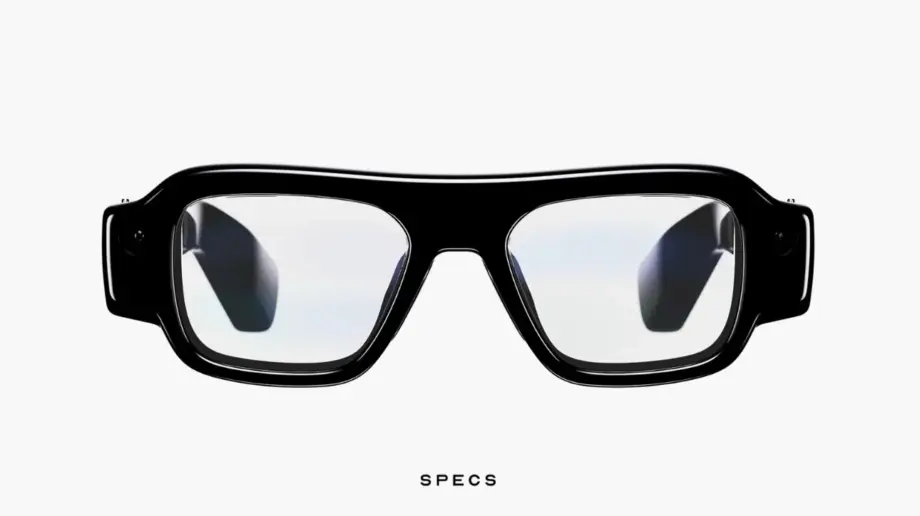
Snap’s latest Specs augmented reality glasses have reportedly received major design improvements, reducing their weight to 132 grams and introducing two frame sizes with flexible spring hinges. A recent hands-on experience suggests the glasses are considerably more comfortable than earlier prototypes, although their $2,200 price and uncertain everyday usefulness remain significant challenges.
Snap is making progress with its next-generation Specs augmented reality glasses, with a redesigned form factor that reportedly addresses some of the most noticeable problems found in earlier prototypes.
According to a hands-on report from TechLayers, the latest version of Specs is substantially lighter, more comfortable and better at managing heat than the prototype demonstrated at CES 2026.
The redesigned glasses now weigh approximately 132 grams, or 4.6 ounces, compared with around 8 ounces for the earlier prototype.
Snap has also introduced two frame sizes and spring hinges intended to improve the fit for different users.
During an approximately hour-long demonstration in San Francisco, the reviewer reported that the updated glasses remained comfortable and did not exhibit the same noticeable heating experienced with the earlier version.
However, the improvements do not resolve every concern surrounding the product.
With a reported price of $2,200, Specs remains a costly augmented reality device whose practical value for everyday consumers is still being debated.
The glasses support experiences involving entertainment, spatial computing, photography, video recording and shared augmented reality content.
But questions remain about whether those capabilities are compelling enough to justify the price.
Snap Specs AR Glasses Receive Major Design Improvements
The biggest reported change to Specs concerns the hardware design.
Earlier in 2026, TechLayers tested a prototype at CES in Las Vegas.
At that stage, the device reportedly weighed around 8 ounces and felt uncomfortable during use.
The reviewer also noted that the glasses became noticeably warm.
These issues can be particularly important for head-worn devices because their weight and temperature directly affect wearing comfort.
Unlike a smartphone or laptop, augmented reality glasses must remain positioned on the user’s face while in operation.
Excessive weight can place pressure on the nose and ears.
Heat generated by internal components can also make extended sessions uncomfortable.
Snap’s newer design reportedly addresses several of these problems.
The latest Specs weigh 132 grams and include changes intended to make the frames easier to wear.
Snap Specs: Earlier Prototype vs Updated Design
| Feature | Earlier CES 2026 prototype | Updated Specs |
|---|---|---|
| Weight | Approximately 8 ounces | 132g / 4.6 ounces |
| Approximate weight in grams | 227g | 132g |
| Fit | Reviewer reported discomfort | Reviewer reported improved comfort |
| Heat | Noticeable warmth during testing | No comparable heating reported during later demo |
| Frame sizes | Not specified in supplied report | 47mm and 52mm |
| Spring hinges | Not established | Included |
| Reported price | Not specified for prototype | $2,200 |
The updated glasses are approximately 42 percent lighter than the earlier 8-ounce prototype.
This is a substantial reduction for a device designed to be worn on the face.
However, the supplied report does not identify exactly which internal components or materials contributed to the lower weight.
Snap Specs Now Weigh Just 132 Grams
The weight reduction is particularly noteworthy.
At approximately 132 grams, the latest Specs are considerably lighter than the earlier version described by the reviewer.
Reducing weight can improve comfort by placing less pressure on the nose, ears and surrounding areas of the face.
It may also make the glasses more practical for longer viewing sessions.
However, 132 grams is still heavier than many conventional eyeglasses.
Whether users find the device comfortable will depend on individual fit, head shape and how long it is worn.
The supplied hands-on report describes a positive experience during an approximately one-hour demonstration.
It does not establish comfort during an entire working day or prolonged continuous use.
Two Frame Sizes and Spring Hinges Improve Fit
Snap is reportedly offering the updated Specs in two sizes: 47mm and 52mm.
According to the report, the different sizes are intended to accommodate users with different head and face dimensions.
The glasses also feature spring hinges.
These hinges allow the arms of the frame to flex, potentially reducing pressure and improving comfort.
Fit is an important consideration for augmented reality glasses because the display must remain correctly positioned relative to the user’s eyes.
A poorly fitting device may be uncomfortable or make the visual experience more difficult to maintain.
The combination of multiple frame sizes and flexible hinges suggests that Snap is placing greater emphasis on wearability.
However, the report does not provide details about prescription lens compatibility or every available fitting adjustment.
Snap Specs Reportedly Run Cooler Than Earlier Prototype
Heat management appears to have improved alongside the weight reduction.
The TechLayers reviewer described the CES prototype as becoming noticeably hot during use.
During the later San Francisco demonstration, however, the reviewer did not experience the same heating problem over approximately one hour.
This is encouraging because thermal comfort can have a major influence on whether users are willing to wear a computing device for extended periods.
Nevertheless, one demonstration cannot establish how the glasses perform in every environment.
Heat output may vary depending on ambient temperature, application workload, battery conditions and the duration of use.
The supplied report does not include thermal measurements or controlled temperature testing.
The improvement should therefore be described as a reviewer observation rather than a verified technical benchmark.
Snap Specs Price: $2,200 in the US
Despite the design changes, pricing remains one of the most significant barriers to adoption.
Snap’s Specs are reportedly priced at $2,200 in the United States.
The glasses were publicly presented during a September 2026 event involving Snap CEO Evan Spiegel.
According to the supplied reporting, pre-orders were already underway by late October.
The $2,200 price places Specs in a premium category of personal computing hardware.
At this level, buyers may expect capabilities that justify purchasing the device alongside, or instead of, existing technology.
However, Specs is not necessarily a direct replacement for a smartphone, tablet or laptop.
Its main distinction is the ability to place digital experiences within an augmented reality environment.
Whether that experience offers sufficient value will depend on the individual user and available applications.
The supplied information does not confirm Indian pricing, import charges or an official India launch.
What Can Snap Specs AR Glasses Do?
Snap describes Specs as a new form of computing device.
The product combines wearable displays, augmented reality content and interactive software experiences.
According to the supplied reporting, its capabilities include video entertainment, reading-related experiences, capturing photos and videos, gaming, spatial interactions and productivity-oriented applications.
However, the availability and maturity of individual experiences vary.
Some are supported integrations, while others represent possible use cases rather than fully established product functions.
The hands-on review suggests that entertainment and casual media creation may currently be easier to appreciate than replacing traditional productivity tools.
Watching Movies and Videos on Snap Specs
Entertainment is one of the more practical applications identified in the report.
Snap has discussed integrations involving HBO Max and YouTube.
These services could allow users to watch video content within a more immersive viewing environment than a conventional smartphone screen.
For example, someone travelling by train might prefer a virtual viewing experience rather than holding a phone throughout a journey.
The appeal lies in bringing a larger-feeling digital display into a relatively portable wearable format.
However, actual usability depends on factors such as display clarity, comfort, battery life, content availability and public-environment awareness.
The supplied report does not establish whether every streaming feature is available in all countries or whether all subscription plans are supported.
Users should also consider whether wearing AR glasses is appropriate and safe in their surroundings.
Could Snap Specs Be Useful for Reading?
Reading is another potential use case discussed in the hands-on report.
The reviewer suggested that an immersive display could help users focus on written content by reducing visual distractions.
This may be useful during travel or while sitting in environments where a conventional screen is less convenient.
However, the report does not establish that a Kindle or newspaper-reading application has officially launched for Specs.
Those integrations were described as possibilities.
The overall reading experience would also depend on text sharpness, display brightness, interface controls and comfort during longer sessions.
The supplied information does not include detailed display resolution or visual clarity measurements.
Therefore, the potential benefits for reading should be considered exploratory rather than confirmed advantages for every user.
Specs Can Capture Photos and Videos
Snap’s glasses also support capturing visual content.
According to the supplied report, users can take photographs and record videos through the wearable device.
This offers a different perspective from traditional smartphone photography.
Because the camera is positioned on the user’s head, footage can more closely reflect the wearer’s point of view.
Such recordings could be useful for informal experiences, travel memories and content intended for sharing with friends.
However, the report does not provide detailed camera specifications, recording resolutions or battery consumption figures.
Users should also consider privacy and consent when recording people in public or private settings.
The ability to capture point-of-view footage does not override local laws or the privacy expectations of others.
Snap Specs Support Shared AR Experiences
One of the more technically interesting aspects of Specs involves shared spatial experiences.
Snap has developed Connected Lenses technology that allows multiple users to interact with synchronised augmented reality content.
In supported experiences, two people can reportedly see corresponding digital objects within a shared environment.
This could enable collaborative games, demonstrations and social interactions involving spatial content.
For example, two users might be able to interact with the same virtual object or participate in a shared augmented reality activity.
However, the specific capabilities depend on the application and supporting technology.
The supplied report does not establish that every AR experience supports multiplayer synchronisation.
Shared spatial computing is nevertheless a notable direction for the product.
It offers functionality that differs from simply displaying videos or notifications in front of a user’s eyes.
Can Snap Specs Replace a Laptop for Work?
Snap has promoted Specs as a device that could support immersive work environments.
The company’s stated ambition includes transforming different locations into flexible digital workspaces.
In theory, spatial computing could provide virtual screens or interfaces that users can access without conventional monitors.
However, the TechLayers reviewer expressed doubts about whether Specs offers a compelling replacement for familiar productivity devices.
A laptop provides a keyboard, trackpad, established applications and a familiar working environment.
An AR workspace must offer sufficient practical advantages to justify wearing a headset or glasses.
Gestural controls and spatial interfaces can also introduce learning curves.
For some users, interacting with virtual elements in public may feel less convenient than using a conventional computer.
The supplied report does not include controlled productivity testing or comparisons involving established desktop applications.
Therefore, Specs should not be described as a proven laptop replacement.
Snap Specs Gaming: Interesting but Expensive
Gaming is another area where Snap has demonstrated augmented reality possibilities.
Spatial games can place interactive digital objects into the user’s surrounding environment.
This can create experiences that differ from conventional console or PC gaming.
However, the product’s high price raises questions about its appeal as a dedicated gaming device.
At $2,200, Specs costs substantially more than many mainstream gaming consoles.
Users considering the device primarily for games may compare it with established gaming platforms that offer extensive libraries and familiar controls.
The supplied report does not identify a complete game catalogue or provide performance benchmarks.
The reviewer’s assessment suggests that gaming can be entertaining but may not currently provide a sufficient reason for mainstream consumers to purchase the device.
Snap Specs vs Traditional Smart Glasses
Snap’s AR glasses occupy a different product category from simpler camera-equipped or audio-focused smart glasses.
Many conventional smart glasses prioritise functions such as photography, audio playback, voice assistance and smartphone connectivity.
More ambitious augmented reality devices attempt to place interactive digital content within the user’s field of view.
This generally requires additional display, sensing and computing components.
Such hardware can introduce trade-offs involving weight, heat, battery life and cost.
AR Glasses vs Camera-Focused Smart Glasses
| Feature | Snap Specs | Simpler smart glasses |
|---|---|---|
| Main purpose | Augmented reality and spatial computing | Often audio, photography and assistance |
| Interactive digital visuals | Core product concept | Not universal |
| Spatial experiences | Supported in compatible applications | Often limited or absent |
| Photo and video capture | Reportedly supported | Common in camera-equipped models |
| Hardware complexity | Relatively high | Varies by product |
| Price | $2,200 reported | Depends on model |
| Everyday comfort | Improved in reviewer demo | Depends on design |
| Productivity potential | Still developing | Usually more limited in visual computing |
This is a general category comparison rather than a benchmark against a particular competing product.
Snap Specs: Main Strengths and Limitations
Based on the supplied TechLayers hands-on report, the updated Specs demonstrate clear progress in hardware design.
However, their everyday value remains less certain.
Reported Strengths
- Substantial reduction in weight compared with the CES prototype
- Improved comfort during a roughly one-hour demonstration
- No comparable heating issue observed during that session
- Two frame sizes and flexible spring hinges
- Immersive entertainment possibilities
- Photo and video capture
- Shared spatial augmented reality experiences
Reported Limitations
- High $2,200 price
- Unclear value for routine productivity tasks
- Limited evidence of mainstream gaming appeal
- Uncertain long-term wearing comfort
- Some potential applications remain conceptual
- No confirmed India price or availability in the supplied report
The strengths and limitations reflect the supplied reporting rather than independent testing by TechLayers.
Why Snap Is Investing in AR Glasses
Augmented reality has long been positioned as a potential direction for personal computing.
The concept involves placing digital information and interactive content within the user’s physical surroundings.
For hardware manufacturers, the challenge is creating a device that is sufficiently lightweight, comfortable and useful for regular use.
Snap’s reported improvements address part of that challenge.
However, the company must also demonstrate why users should adopt Specs in addition to their existing devices.
A compelling software ecosystem could play an important role.
Entertainment, social experiences, creative tools and developer applications may eventually give the device broader appeal.
But the availability of technology alone does not guarantee widespread adoption.
Price, comfort, reliability and everyday usefulness remain important factors.
Snap Specs India Launch and Availability
The supplied reporting confirms a US price of approximately $2,200 and indicates that pre-orders had begun.
However, it does not establish an official launch date for India.
There is also no confirmed Indian retail price.
A direct currency conversion would not necessarily reflect the eventual price because of taxes, import costs and regional distribution arrangements.
Indian consumers should wait for official availability information from Snap rather than assuming the glasses will be sold locally.
Are Snap Specs Worth $2,200?
The answer depends on what the buyer expects from an augmented reality device.
For developers, technology enthusiasts and early adopters interested in spatial computing, Specs may offer a way to experiment with newer interaction methods.
The updated hardware appears to address some important comfort concerns identified in earlier prototypes.
However, the supplied hands-on review does not establish that the glasses provide a clear everyday advantage over existing phones, tablets or computers.
For mainstream users, the $2,200 price could be difficult to justify without more compelling applications.
Entertainment and shared AR experiences may be appealing, but the long-term value will depend on how the software ecosystem develops.
What Happens Next for Snap Specs?
Snap’s updated Specs appear to demonstrate meaningful progress in wearable hardware design.
Reducing the weight to 132 grams, introducing multiple frame sizes and improving comfort are relevant changes for a device intended to be worn for extended periods.
The company’s challenge now extends beyond physical design.
It must demonstrate practical reasons for consumers to use augmented reality glasses regularly.
The current product reportedly offers a combination of immersive entertainment, content creation, spatial interaction and productivity-oriented features.
However, the hands-on review suggests that its most compelling everyday purpose remains uncertain.
The key development is that Snap has reportedly made Specs considerably lighter and more comfortable, but its $2,200 price and developing application ecosystem remain major questions for mainstream adoption.
TechLayers will continue following advances in augmented reality, smart glasses and wearable computing.
Have a story tip or feedback? Contact [email protected].
© TechLayers. Original editorial content.