

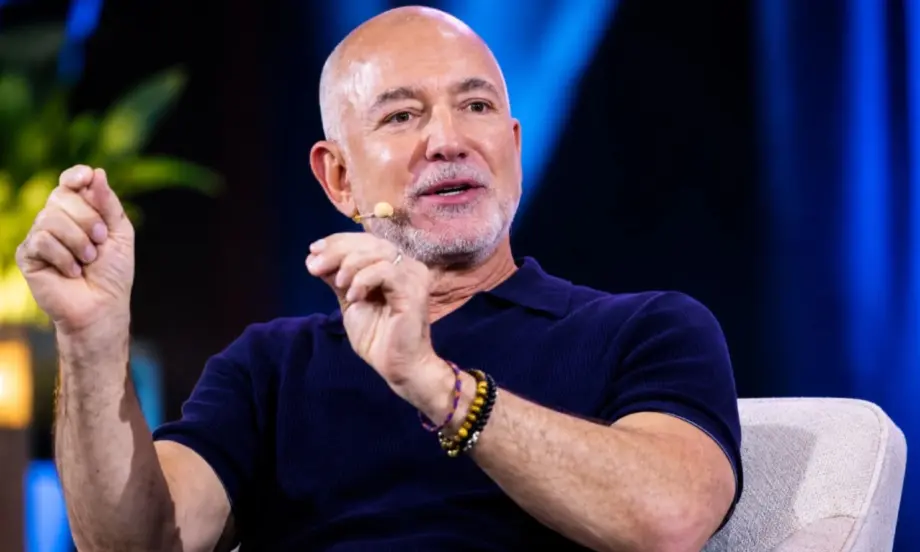
Artificial intelligence, sustainability, and the future of human civilization were at the center of a high-profile discussion during VivaTech 2026, Europe’s largest technology conference. Amazon founder Jeff Bezos used the global stage in Paris to present an optimistic vision of AI-driven innovation while also making comments that have fueled widespread debate among technology experts, economists, and environmental advocates.
Appearing alongside Blue Origin CEO Dave Limp and former NASA astronaut Mike Massimino, Bezos discussed how advanced AI could reshape industries, transform the global workforce, and accelerate humanity’s expansion beyond Earth.
While his comments on innovation attracted attention, it was his remarks about data center water consumption and superintelligence that generated the strongest reactions.
Bezos Says AI Could Create More Jobs Than It Eliminates
One of the most significant themes of Bezos’s appearance was his belief that artificial intelligence will ultimately increase demand for human labor rather than replace it.
As concerns grow globally about automation disrupting employment, Bezos argued that advanced AI systems could unlock new industries and opportunities by helping people identify and solve more problems.
According to Bezos, future AI systems should be viewed as tools that expand human capability rather than replace human workers.
He pointed to emerging efforts in artificial intelligence engineering, describing a future where AI can dramatically accelerate product development, research, and innovation cycles.
The central idea is straightforward: when technology lowers barriers to experimentation, more ideas become viable, leading to the creation of entirely new markets, products, and services.
Why Bezos Believes AI Could Lead to Labor Shortages
Bezos suggested that AI may eventually create a scenario where demand for skilled workers exceeds supply.
In his view, artificial intelligence reduces the time between an idea and its implementation. As a result, organizations may be able to launch new products, businesses, and technologies at unprecedented speed.
If innovation accelerates significantly, the need for engineers, researchers, designers, operators, and service professionals could expand rather than shrink.
This perspective contrasts with concerns from some economists and labor analysts who warn that automation could displace workers faster than new employment opportunities emerge.
The long-term outcome remains uncertain, but the debate reflects one of the most important economic questions facing the AI era.
Data Center Water Consumption Becomes a Major Point of Controversy
The most controversial portion of Bezos’s VivaTech discussion focused on the environmental demands of artificial intelligence infrastructure.
Modern AI systems rely on massive data centers that consume significant amounts of electricity and water. Water is primarily used to cool servers and maintain optimal operating conditions.
Amazon recently disclosed that its data center operations consumed approximately 2.5 billion gallons of water over the past year. Similar disclosures from other major technology companies have intensified scrutiny of AI infrastructure expansion.
Bezos argued that the development of advanced intelligence could eventually help humanity solve many of its resource challenges.
His comments suggested that society should evaluate current resource consumption in the context of AI’s future potential to generate scientific breakthroughs, efficiency gains, and technological solutions.
Critics Question Long-Term Assumptions
Environmental organizations and sustainability advocates have expressed concerns about this line of reasoning.
Critics argue that future technological breakthroughs cannot be guaranteed and that current resource demands must still be managed responsibly, particularly in regions facing drought conditions and water scarcity.
The discussion highlights a growing challenge facing the technology industry: balancing AI innovation with environmental sustainability.
As governments, regulators, and communities examine the impact of expanding data center networks, water usage is expected to remain a major policy issue throughout the coming years.
AI Infrastructure Faces Growing Global Scrutiny
The conversation around water consumption is part of a broader examination of artificial intelligence infrastructure.
Several issues continue to attract attention:
- Data center energy demand
- Water consumption for cooling systems
- Carbon emissions from AI training
- Land use for large-scale facilities
- Power grid capacity requirements
As AI adoption accelerates across industries, infrastructure investments are expected to increase significantly.
Industry leaders argue that technological advances will improve efficiency over time, while critics maintain that rapid expansion must be accompanied by stronger environmental safeguards.
The balance between innovation and sustainability remains one of the defining policy challenges of the AI economy.
Bezos Outlines Vision for Lunar Bases and Mars Colonization
Beyond artificial intelligence, Bezos used the VivaTech stage to discuss long-term plans for human expansion into space.
The Blue Origin founder reiterated his belief that space infrastructure will play a critical role in humanity’s future development.
According to Bezos, the Moon represents the logical next step because of its proximity to Earth and its potential as a source of materials and resources.
He emphasized that transporting materials from the Moon could require substantially less energy than launching them directly from Earth.
Permanent Lunar Presence Remains a Key Goal
Bezos described a future where permanent lunar facilities support scientific research, industrial operations, and deeper space missions.
In his vision:
- The Moon becomes a strategic logistics hub
- Space manufacturing expands over time
- Mars colonization follows future technological advancements
- Heavy industry gradually moves off Earth
Supporters argue that such developments could reduce environmental pressures on Earth while opening new economic opportunities.
Skeptics note that the technological, financial, and logistical challenges remain enormous and could take decades to overcome.
The Intersection of AI, Sustainability and Space
What made Bezos’s VivaTech appearance particularly noteworthy was the way he connected artificial intelligence, environmental sustainability, and space exploration into a single long-term vision.
His argument suggests that advanced AI could accelerate innovation, helping solve resource challenges while enabling humanity to expand beyond Earth.
Supporters view this as an ambitious roadmap for technological progress.
Critics argue that it places significant faith in future breakthroughs while underestimating immediate social and environmental concerns.
Regardless of where one stands in the debate, the discussion reflects larger questions confronting governments, businesses, and society:
- Will AI create more jobs or replace them?
- Can AI infrastructure scale sustainably?
- How should resources be allocated during technological transitions?
- What role should space exploration play in humanity’s future?
Why Bezos’s Comments Matter
Jeff Bezos remains one of the most influential figures in technology, aerospace, and global business. His views often shape broader conversations around innovation and investment.
The issues he highlighted at VivaTech 2026—artificial intelligence, resource management, and space development—are likely to remain central topics throughout the remainder of the decade.
As AI capabilities continue advancing and governments evaluate new regulatory frameworks, debates around employment, sustainability, and infrastructure will only intensify.
VivaTech 2026 demonstrated that while enthusiasm for AI remains strong, questions about its economic impact, environmental footprint, and long-term consequences are becoming equally important.
For technology leaders, policymakers, and consumers alike, those conversations are just beginning.