

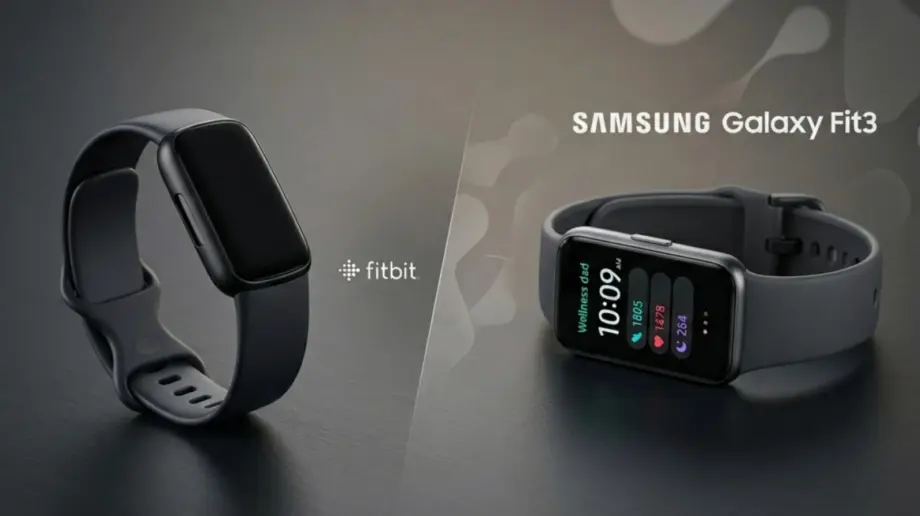
The fitness tracker market is evolving rapidly, with manufacturers exploring very different approaches to health monitoring and wearable technology. Google’s newly introduced Fitbit Air and Samsung’s popular Galaxy Fit3 perfectly demonstrate this shift.
While Fitbit Air embraces a screen-free design focused entirely on health tracking and AI-powered wellness insights, the Galaxy Fit3 combines fitness monitoring with smartwatch-style functionality through a vibrant AMOLED display.
Both devices target budget-conscious consumers seeking health and activity tracking without investing in expensive smartwatches. However, they deliver fundamentally different user experiences.
Here’s a complete breakdown of how the Fitbit Air compares with the Samsung Galaxy Fit3.
Fitbit Air vs Galaxy Fit3: Design and Wearability
The biggest difference between these devices becomes obvious the moment you put them on your wrist.
Fitbit Air
Google has designed the Fitbit Air as a minimalist wearable with no display at all.
Key Design Features
- Screen-free design
- Ultra-lightweight sensor pod
- Micro-adjustable Performance Loop band
- Optional Active and Elevated Modern bands
- Multiple style options
- Stephen Curry Special Edition available
The goal is simple: collect health data continuously without distracting users with notifications or screens.
Users interact primarily through the Google Health app rather than the device itself.
Samsung Galaxy Fit3
Samsung takes the opposite approach.
Key Design Features
- 1.6-inch AMOLED display
- Touchscreen controls
- Aluminum frame
- Glass front panel
- Replaceable bands
- More than 100 watch face options
The Galaxy Fit3 functions almost like a lightweight smartwatch, allowing users to access information directly from their wrist.
Design Winner
Fitbit Air: Best for minimalists and sleep tracking.
Galaxy Fit3: Best for users who want visible information and smartwatch convenience.
Health and Fitness Tracking Comparison
Health monitoring is where Fitbit Air establishes a clear advantage.
| Feature | Fitbit Air | Galaxy Fit3 |
|---|---|---|
| Continuous Heart Rate | ✓ | ✓ |
| Blood Oxygen (SpO2) | ✓ | ✓ |
| Sleep Tracking | ✓ | ✓ |
| Heart Rate Variability (HRV) | ✓ | ✗ |
| Skin Temperature | ✓ | ✗ |
| AFib Detection | ✓* | ✗ |
| Readiness Score | ✓ | ✗ |
| Cardio Load | ✓ | ✗ |
| Stress Tracking | Limited | ✓ |
*Availability depends on region.
Fitbit Air Focuses on Advanced Health Insights
Google has positioned Fitbit Air as a health-first wearable.
Key features include:
- Continuous heart monitoring
- Recovery analysis
- Readiness scoring
- Sleep scoring
- HRV monitoring
- Skin temperature trends
- AFib detection support
These features are particularly valuable for users who prioritize long-term wellness monitoring rather than simply counting steps.
Galaxy Fit3 Excels in Workout Tracking
Samsung emphasizes exercise tracking.
The Galaxy Fit3 supports:
- 101 workout modes
- 6 automatic workout detections
- Swim tracking
- Stroke counting
- Stress monitoring
- Sleep coaching
For users who participate in a wide variety of sports and fitness activities, Samsung provides broader workout support.
Health Tracking Winner
Fitbit Air
Workout Tracking Winner
Samsung Galaxy Fit3
Battery Life Comparison
Battery life remains one of the most important factors when choosing a wearable.
Fitbit Air
- Up to 7 days battery life
- Fast charging support
- 5-minute charge delivers approximately one day of use
Galaxy Fit3
- Up to 13 days battery life
- 208mAh battery
- Around 3.5 days with Always-On Display enabled
Samsung nearly doubles Fitbit’s battery endurance.
Battery Winner
Samsung Galaxy Fit3
Software and Ecosystem
Software plays a major role in the overall experience.
Fitbit Air
- Google Health app
- Gemini-powered AI coaching
- Personalized wellness recommendations
- Android support
- iPhone support
The standout feature is AI-driven coaching that analyzes health data and provides personalized recommendations.
Galaxy Fit3
- Samsung Health platform
- Sleep coaching
- Wellness reports
- Deep Galaxy ecosystem integration
Samsung focuses on delivering useful health summaries without requiring paid AI services.
Ecosystem Winner
Fitbit Air: Better cross-platform compatibility.
Galaxy Fit3: Better for Samsung phone owners.
Smart Features and Notifications
This category heavily favors Samsung.
| Feature | Fitbit Air | Galaxy Fit3 |
|---|---|---|
| Notifications | ✗ | ✓ |
| Call Alerts | ✗ | ✓ |
| Message Alerts | ✗ | ✓ |
| Music Controls | ✗ | ✓ |
| Touchscreen | ✗ | ✓ |
The Fitbit Air intentionally avoids smartwatch functionality.
Samsung includes many features consumers expect from modern wearables.
Smart Features Winner
Samsung Galaxy Fit3
Water Resistance
Both trackers are designed for active lifestyles.
Galaxy Fit3
- IP68 certified
- Swim tracking
- Stroke counting
Fitbit Air
- Water-resistant
- Suitable for workouts and sweat
- Official IP rating not specified
Water Resistance Winner
Samsung Galaxy Fit3
Price Comparison
Fitbit Air
United States
- $99.99
Expected India Price
- Rs 8,499 to Rs 9,999
Samsung Galaxy Fit3
India Price
- Rs 3,499 to Rs 4,999
Global Price
- Approximately $41.99
Samsung offers a significantly lower purchase price.
The Subscription Factor Changes Everything
The largest difference between these products may not be hardware.
It may be cost of ownership.
Fitbit Air Costs
- Device: $99.99
- Premium Trial: 3 months included
- Google Health Premium: $9.99/month afterward
Estimated Ownership Cost
Year One: Approximately $220
Two Years: Approximately $340
Galaxy Fit3 Costs
- Device purchase only
- No subscription required
Estimated Ownership Cost
Two Years: Approximately $41.99
For many consumers, this cost difference will be difficult to ignore.
Fitbit Air vs Samsung Galaxy Fit3: Who Should Buy Which?
Buy Fitbit Air If:
✔ You use both Android and iPhone devices
✔ You want AFib detection and advanced health metrics
✔ You value recovery and readiness tracking
✔ You prefer a screen-free wearable
✔ You want AI-powered health coaching
✔ You already subscribe to Google’s AI services
Buy Samsung Galaxy Fit3 If:
✔ You use Android regularly
✔ You want the best value for money
✔ You prefer a bright AMOLED display
✔ You need notifications on your wrist
✔ You swim frequently
✔ You want longer battery life
✔ You dislike monthly subscriptions
Final Verdict
The Fitbit Air and Samsung Galaxy Fit3 serve different audiences despite competing in the same affordable fitness wearable segment.
The Fitbit Air stands out as a sophisticated health-monitoring platform. Its AFib detection, HRV analysis, skin temperature tracking, readiness scoring, and Gemini-powered coaching make it one of the most advanced wellness-focused trackers available.
However, those benefits come with a higher purchase price and ongoing subscription costs.
The Samsung Galaxy Fit3, on the other hand, delivers exceptional value. It offers a bright AMOLED display, smartwatch-style features, 13-day battery life, extensive workout tracking, and no recurring fees.
Tech Bext Verdict
⭐ Fitbit Air: 8.7/10
Best for users focused on advanced health analytics and AI-driven coaching.
⭐ Samsung Galaxy Fit3: 9.2/10
Best overall value for most buyers thanks to its rich feature set, lower price, longer battery life, and zero subscription costs.
For the majority of consumers in 2026, the Samsung Galaxy Fit3 remains the smarter purchase, while the Fitbit Air is better suited to users seeking deeper health insights and personalized wellness guidance.