

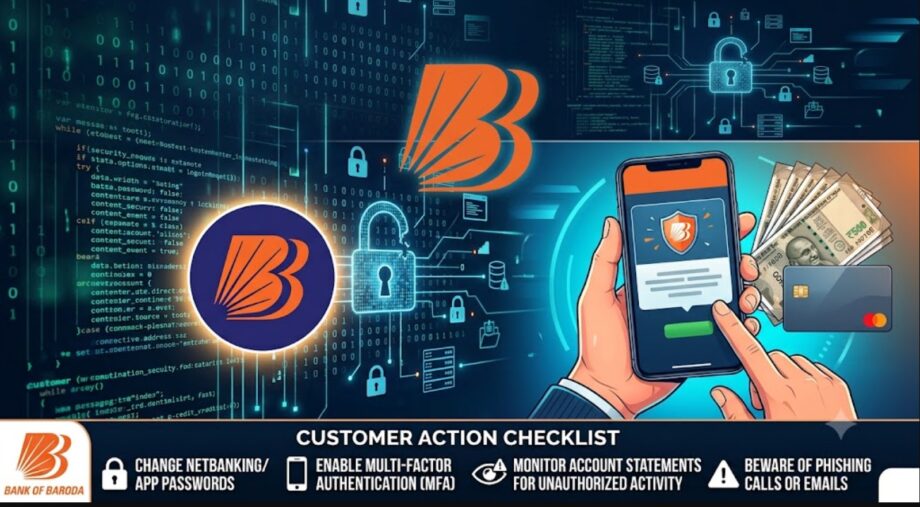
New Delhi: Reports of an alleged 1TB data leak involving Bank of Baroda have raised concerns among millions of customers across India. The reportedly leaked database is said to contain sensitive customer information, including names, Aadhaar details, bank account information, loan records and internet banking-related data.
Bank of Baroda has acknowledged the reports and said it is investigating the claims. At the time of publication, the bank has not confirmed that the leaked data is authentic or that its systems have been compromised.
While the investigation continues, cybersecurity experts advise customers to remain calm but take precautionary steps to strengthen their account security.
What Is Known So Far?
According to reports circulating online, nearly 1TB of data allegedly linked to Bank of Baroda has surfaced on the internet.
The reported data may include:
- Customer names
- Aadhaar details
- Account information
- Loan records
- Internet banking-related information
- Other personal customer data
The authenticity and scope of the alleged leak have not been independently verified, and the bank has not confirmed the reports.
Is Your Money Safe?
For most customers, yes.
A data breach involving personal information does not automatically mean criminals can access bank accounts or withdraw money.
Modern banking platforms rely on multiple security controls before allowing financial transactions, including:
- Internet banking passwords
- Mobile banking authentication
- One-Time Passwords (OTPs)
- UPI PINs
- Debit and credit card PINs
- Device verification
- Fraud monitoring systems
- Real-time transaction alerts
These safeguards mean that personal information alone is generally not sufficient to access or transfer funds from an account.
The Biggest Risk Is Phishing, Not Direct Account Hacking
Cybersecurity professionals warn that the greatest danger following a suspected data breach is often social engineering, commonly known as phishing.
If fraudsters obtain customer information such as names, phone numbers, account details or branch information, they may use it to impersonate bank officials.
Customers could receive:
- Phone calls claiming to be from the bank
- SMS messages requesting account verification
- Emails warning about account suspension
- WhatsApp messages asking customers to “secure” their accounts
Because the caller may already know personal details, the communication can appear genuine.
The objective is usually to trick customers into revealing confidential information such as:
- OTPs
- UPI PINs
- Internet banking passwords
- Debit or credit card PINs
- CVV numbers
Banks never ask customers to share these details.
What Should Bank of Baroda Customers Do Now?
Even though the investigation is ongoing, customers can reduce their risk by following basic cybersecurity practices.
1. Change Your Banking Passwords
Update your internet banking and mobile banking passwords immediately, especially if you have reused the same password on multiple websites.
Choose a password that is:
- Unique
- Long
- Difficult to guess
- Different from passwords used elsewhere
Avoid using birthdays, names or simple number combinations.
2. Enable All Available Security Features
Where available, activate:
- Two-factor authentication (2FA)
- Biometric login (fingerprint or facial recognition)
- Login alerts
- Transaction notifications
Also ensure the email account linked to your bank account has a strong password and two-factor authentication enabled.
3. Monitor Your Account Frequently
Rather than waiting for monthly statements, regularly review your account through the official banking app or website.
Watch for:
- Unauthorized transactions
- Failed login attempts
- Changes to registered mobile numbers or email addresses
- Unexpected OTP requests
Early detection significantly improves the chances of preventing fraud.
4. Be Wary of Phone Calls
Fraudsters often exploit public concern after reports of data breaches.
Remember this important rule:
No genuine Bank of Baroda employee will ever ask for:
- OTP
- ATM PIN
- UPI PIN
- Internet banking password
- CVV
If anyone requests these details, end the conversation immediately and contact the bank using its official customer service channels.
5. Avoid Clicking Links in Messages
Cybercriminals frequently create fake websites that closely resemble official banking portals.
Ignore unsolicited messages claiming:
- “Your account has been blocked.”
- “Complete KYC immediately.”
- “Verify your account after the data breach.”
Instead, access your account only by:
- Typing the bank’s official website address directly into your browser
- Using the official Bank of Baroda mobile banking application
6. Verify Your Contact Information
Ensure your registered:
- Mobile number
- Email address
are current and active.
Transaction alerts are often the first indication of suspicious activity.
What If You Notice Suspicious Activity?
If you receive an unexpected OTP, discover an unauthorized transaction or believe someone has accessed your account:
- Contact Bank of Baroda through its official customer support channels immediately.
- Change your internet banking password.
- Block your debit or credit card if necessary.
- Report unauthorized transactions without delay.
- Follow the bank’s instructions for securing your account.
Prompt reporting can help minimize financial losses and support a faster resolution.
Should You Close Your Bank Account?
In most cases, no.
Cybersecurity experts generally do not recommend closing a bank account solely because reports of a possible data breach have emerged.
Instead, customers should:
- Strengthen account security.
- Stay alert for phishing attempts.
- Monitor account activity.
- Wait for the findings of the bank’s investigation.
Unless authorities confirm that banking systems themselves have been compromised, these preventive measures are typically the most practical response.
How to Stay Safe After Any Data Breach
Whether or not the alleged Bank of Baroda leak is confirmed, these cybersecurity habits can help protect your financial information:
- Use a different password for every financial account.
- Enable two-factor authentication wherever available.
- Never share OTPs or PINs with anyone.
- Keep banking apps updated.
- Regularly review account activity.
- Report suspicious messages or calls immediately.
Key Takeaways
- Bank of Baroda is investigating reports of an alleged 1TB data leak and has not confirmed the authenticity of the reported data.
- A data breach does not automatically mean your money is at risk.
- The biggest concern is phishing and identity-based fraud, where criminals use personal information to deceive customers.
- Customers should change passwords, enable additional security features, monitor their accounts closely and avoid sharing confidential banking credentials.
- Always use official Bank of Baroda communication channels for account-related assistance.