

Enterprise buyers are reportedly facing substantial price increases on AI servers months after negotiating purchases, as expensive memory chips and strong demand for computing infrastructure put pressure on hardware supply chains.
The artificial intelligence infrastructure boom is creating an unexpected financial challenge for some of the world’s largest technology buyers.
Companies purchasing powerful AI servers are reportedly being asked to pay significantly more than the prices discussed months earlier, with some increases reaching 45%.
According to a report by the Financial Times, server manufacturers including Dell Technologies, Hewlett Packard Enterprise (HPE), Lenovo and Supermicro have been seeking higher payments from customers as component costs rise.
The changes are affecting organizations building dedicated data centers, including major quantitative trading firms that rely on high-performance computing for research and financial modeling.
The situation underscores a growing problem in the AI hardware market: equipment that has been negotiated well in advance of delivery may become considerably more expensive before it reaches the customer.
Why Are AI Server Prices Increasing?
The price pressure is closely connected to the rapid expansion of artificial intelligence infrastructure.
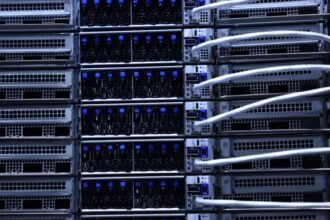
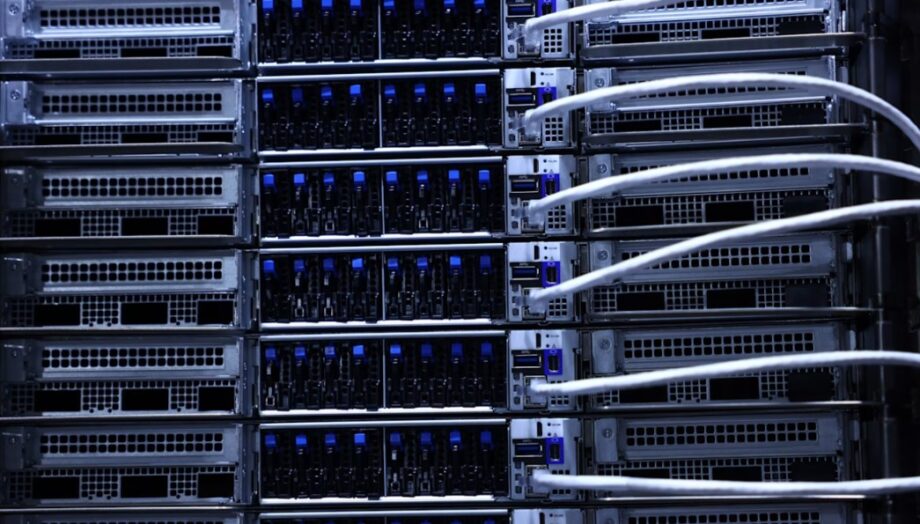
AI servers require specialized components, including graphics processing units (GPUs), high-capacity memory, processors, networking equipment and advanced cooling systems.
Nvidia is a major supplier of GPUs used in AI computing, while AMD also develops processors and accelerators for demanding data center workloads.
However, the cost of an AI server extends beyond its central processor.
Memory, storage, networking hardware, power infrastructure and system integration can account for substantial portions of the overall expense.
When component prices increase, server manufacturers face a choice: absorb the additional costs, renegotiate commercial terms or attempt to pass higher expenses to customers.
The Financial Times reports that rising memory costs have become a particularly important factor behind recent pricing disputes.
Research from JPMorgan, cited in the report, indicates that memory prices have increased by more than 400% since the beginning of 2024.
That figure should not be interpreted as a uniform increase across every type of memory chip or product configuration. Actual pricing depends on the component and market segment.
Nevertheless, sharp increases in memory costs can have a significant effect on servers designed for data-intensive computing.
Dell, HPE, Lenovo and Supermicro Face Pricing Pressure
Major server manufacturers occupy an important position between component producers and companies building AI infrastructure.
Businesses typically negotiate large equipment orders months before the systems are delivered.
During that period, manufacturers must secure processors, memory modules, networking components and other hardware required to complete the order.
According to people familiar with the situation cited by the Financial Times, some customers have faced revised pricing when their equipment approaches delivery.
Reported increases have ranged from approximately 25% to 45% in certain cases.
One source cited in the report estimated that GPU server prices had risen by at least 20% to 30%, while some CPU-focused computing nodes had experienced even larger increases.
The report also suggested that certain CPU nodes, where memory represents a substantial portion of the hardware cost, had become three times as expensive or more.
These figures describe reported pricing experiences rather than a verified, uniform price increase across every product sold by the four manufacturers.
The distinction is especially important because server prices vary widely depending on processor generation, memory capacity, networking architecture, order volume and commercial terms.
Financial Trading Firms Among the Affected Buyers
The reported cost increases are particularly significant for quantitative trading companies.
Firms such as Jane Street, Optiver and Hudson River Trading invest heavily in computing infrastructure to develop and evaluate sophisticated trading strategies.
Their systems process large datasets, perform simulations and support research that can require substantial processing power.
While major cloud companies are among the most visible investors in AI hardware, quantitative investment firms are also important buyers of high-performance computing systems.
The Financial Times identified these trading businesses among companies exposed to the reported pricing pressures.
However, individual firms did not publicly confirm every detail of their commercial arrangements in the supplied report.
For these businesses, additional computing capacity may be valuable enough to justify accepting higher equipment costs.
Delaying a major infrastructure project can also create operational disadvantages, particularly when specialized hardware is difficult to obtain quickly from alternative suppliers.
That does not mean every buyer will accept a revised price. The outcome depends on procurement contracts, supplier alternatives, delivery schedules and the importance of the planned computing capacity.
Dell and XTX Markets Dispute Highlights Contract Risks
One of the most prominent examples of the pricing tensions involves a legal dispute between Dell and British quantitative trading company XTX Markets.
According to court filings described by the Financial Times, XTX initiated proceedings against Dell in an Irish court in June 2026.
The dispute concerns a major server supply agreement.
XTX alleged that the companies had agreed to a fixed server price of approximately $549 million.
The trading firm also said it paid an additional $5 million specifically to secure greater pricing certainty.
However, XTX claimed that Dell subsequently sought another $62 million to $70 million because component costs had increased.
The additional demand became the subject of a legal disagreement over the commercial arrangements.
XTX argued in its filings that the proposed increase conflicted with the pricing certainty it believed had been negotiated.
The dispute illustrates the importance of understanding how large infrastructure contracts allocate the risk of rising component prices.
A buyer may expect a negotiated price to remain fixed, while a supplier may seek contractual mechanisms allowing adjustments when hardware costs move substantially.
Whether a specific price increase is contractually permitted depends on the actual agreement and applicable law.
Importantly, XTX’s statements are allegations made in legal proceedings, not judicial findings. The case was described as ongoing in the supplied reporting, and no final outcome has been independently established here.
What Do Higher Memory Prices Mean for AI Infrastructure?
The rapid expansion of AI systems has increased demand for several categories of computing hardware.
Training large AI models and running demanding inference workloads can require extensive processing, memory bandwidth and data movement between interconnected machines.
As a result, buyers must consider the cost of complete computing systems rather than GPUs alone.
Two important memory categories help explain the issue.
High-bandwidth memory (HBM) is used alongside many advanced AI accelerators and is designed to deliver the high data-transfer rates needed by demanding workloads.
Conventional server DRAM provides working memory for CPUs and other parts of enterprise computing systems.
These components serve different purposes, but supply constraints and price changes across memory markets can affect infrastructure budgets.
A server with unusually large memory requirements may be particularly sensitive to changes in DRAM pricing.
Meanwhile, sophisticated GPU configurations may face cost pressures from accelerators, high-bandwidth memory and supporting components.
The exact effect depends on the server’s bill of materials and purchasing arrangements.
For enterprises, this makes long-term infrastructure budgeting more difficult when component prices change significantly between an initial quotation and final delivery.
Why Some Buyers Still Accept Higher Prices
At first glance, paying substantially more than an earlier negotiated amount may appear commercially unreasonable.
Yet companies making large investments in computing infrastructure must weigh several factors.
Specialized AI servers are not always interchangeable. Switching suppliers can involve changes to hardware configurations, networking arrangements, software environments and delivery schedules.
A buyer may also have already invested in data center space, electrical infrastructure or cooling systems designed around a particular equipment order.
If the equipment is central to a time-sensitive project, delays may create additional costs beyond the revised purchase price.
For quantitative trading companies, computational research capabilities can also influence how quickly teams develop and evaluate trading strategies.
Consequently, buyers may sometimes prioritize receiving the required hardware over pursuing alternative equipment with uncertain delivery times.
That willingness to pay does not remove the importance of contract enforcement or procurement discipline.
Instead, it demonstrates how difficult the trade-off can become when demand is strong and supply options are limited.
What Businesses Should Check Before Signing AI Server Contracts
The reported price increases provide several lessons for organizations planning large AI infrastructure investments.
Businesses negotiating equipment orders should pay close attention to whether quoted prices are firm, conditional or subject to adjustment before delivery.
A contract described as having an indicative price may expose the buyer to substantially different costs than one with enforceable fixed-price terms.
Procurement teams should also clarify how the agreement handles unexpected changes in memory, GPUs and other component costs.
Other important considerations include delivery milestones, component substitutions, cancellation rights, and any limits on permissible price adjustments.
For particularly large purchases, independent technical and legal review may help identify risks that are easy to overlook during negotiations.
Companies should also evaluate the total cost of deploying the infrastructure, including energy consumption, maintenance, networking and data center operations.
A server purchase price is only one part of the overall investment.
Could Rising AI Hardware Costs Affect Cloud Computing Prices?
Higher server costs may eventually influence the economics of other technology services.
Cloud providers, AI developers and enterprise computing companies all depend on physical infrastructure.
When building or expanding that infrastructure becomes more expensive, operators may face pressure on margins or reconsider future pricing and investment plans.
However, a rise in server acquisition costs does not automatically result in higher prices for cloud customers.
Cloud service pricing also depends on utilization, competition, existing hardware, energy costs and long-term purchasing agreements.
Large providers may have different supply arrangements from smaller businesses purchasing equipment directly.
The potential impact on cloud services is therefore a broader market consideration rather than a confirmed consequence of the specific contract disputes described in the Financial Times report.
AI Infrastructure Boom Creates New Procurement Challenges
The reported price increases highlight how demand for AI computing is reshaping the economics of enterprise hardware.
For manufacturers, rising component costs can complicate production and pricing commitments.
For customers, long procurement cycles create exposure to market changes between contract negotiation and equipment delivery.
And for financial trading firms investing heavily in their own infrastructure, obtaining high-performance computing capacity can become a strategic priority even when equipment costs rise.
The Dell–XTX dispute adds another dimension by demonstrating how disagreements over pricing can move from commercial negotiations into court proceedings.
As companies continue investing in AI systems, the reliability of equipment pricing and delivery commitments may become almost as important as the performance of the hardware itself.
The central challenge for businesses is no longer simply securing enough computing power. It is securing that capacity at a predictable cost, under commercial terms that remain clear when market conditions change.
Have a story tip or feedback? Write to [email protected].